What Causes HNRNP-RNDDs?
Understanding the genetic origins of these rare neurodevelopmental disorders and how they're inherited from generation to generation.
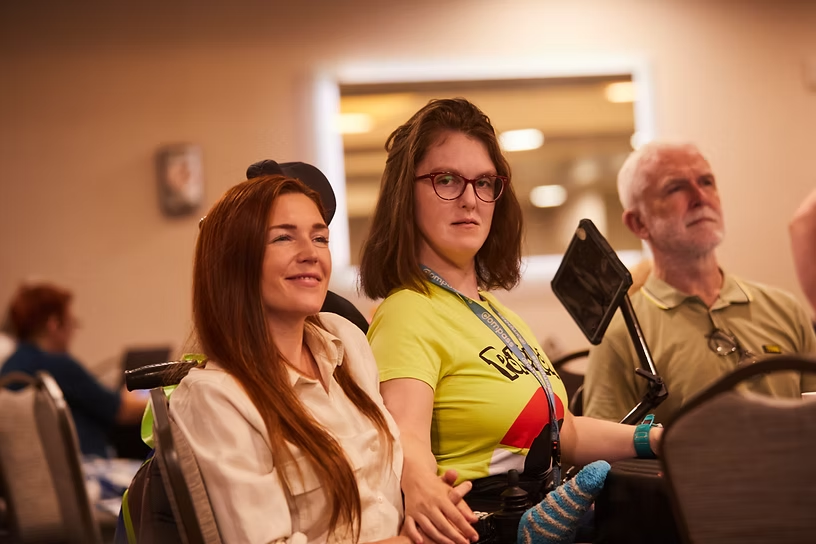
Kathleen Morton (center), who has HNRNPK-NDD or Au-Kline, her sister (left), and father (right) engaged in 2024 foundation conference
Understanding the Genetics
The essential concepts explained in plain language
"Brand New" Variants
Most HNRNP variants happen spontaneously—they're not passed down from parents. The recurrence risk is typically less than 1%.
One Copy Matters
Only one changed copy of the gene is needed to cause the condition.
Different Presentations
Even with the same variant, symptoms can vary widely between individuals. Every person is unique.
A Spontaneous Change
A de novo variant is a genetic change that occurs for the first time in a family. It happens in an egg or sperm cell, or very early after fertilization. Neither parent carries the variant—it's completely new.
What This Means for Families
- Low recurrence riskTypically less than 1% chance in future pregnancies
- Not inherited from parentsStandard genetic testing of parents is usually negative
- Rare exception: mosaicismIn rare cases, a parent may carry the variant in some cells
Every family's situation is unique. Many families find it helpful to meet with a genetic counselor who can explain their specific circumstances and answer questions.
How HNRNP Variants Are Passed On
Once a variant exists, it follows specific inheritance patterns
Autosomal Dominant
Only one copy of the gene needs to be affected. If a parent has the variant, each child has a 50% chance of inheriting it. Affects males and females equally.
X-Linked
The gene is located on the X chromosome. Because males have one X (XY) and females have two (XX), these conditions may present differently between sexes.
Missense
A single "letter" is swapped, changing one amino acid of the protein. This can change how the protein functions.
Frameshift
Letters are added or removed, scrambling the genetic message downstream. This results in loss-of-function or a shorter version of the protein.
Nonsense
A change creates a premature "stop" signal, making the protein too short. This results in loss-of-function or a shorter version of the protein.
Structural
Larger sections of DNA are deleted, duplicated, or rearranged.
Even with the same type of variant, symptoms can vary widely. The specific location and nature of the change both matter.
What's Next?
Explore more resources to understand HNRNP disorders
Signs & Symptoms
Learn about the clinical features and how they present across different disorders.
Learn moreScience & Research
Explore current research initiatives and scientific publications.
View researchNewly Diagnosed?
Find support and resources for families who just received a diagnosis.
Get support